The aviation industry is undergoing a quiet revolution, one that promises to transform the experience of economy class travelers. Dubbed "Economy Class Stretch 2.0," this movement represents a fundamental rethinking of how airlines approach their most abundant yet often overlooked customer segment. What began as minor seat adjustments has evolved into a comprehensive redesign philosophy that challenges long-held assumptions about budget air travel.
At its core, Economy Class Stretch 2.0 isn't just about adding an extra inch of legroom. Forward-thinking carriers are implementing holistic solutions that address passenger comfort, psychological well-being, and overall satisfaction without significantly impacting operational costs. These innovations come at a critical time, as airlines face increasing pressure to improve the flying experience while maintaining competitive pricing structures.
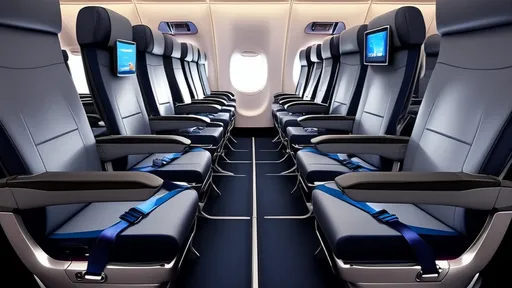
The psychology of space plays a crucial role in these new cabin designs. Researchers have found that passengers' perception of comfort often matters more than absolute measurements. Clever design tricks like tapered seatbacks, strategically placed lighting, and curved partitions create visual cues that make spaces feel larger than they actually are. Some airlines have even experimented with virtual reality simulations during the design phase to test how different configurations affect passenger perception.
Material science breakthroughs are enabling thinner yet more supportive seat designs. Advanced composites and memory foams allow for seats that maintain comfort while reducing bulk, effectively creating more usable space per passenger. These innovations demonstrate how Economy Class Stretch 2.0 represents a marriage of engineering and ergonomics rather than simply expanding physical dimensions.
The pandemic's lasting impact continues to influence these developments. Health-conscious travelers now prioritize personal space and air quality more than ever before. In response, airlines are incorporating antimicrobial surfaces, improved ventilation systems, and touchless technologies into their Economy Class Stretch initiatives. These features, once considered premium amenities, are becoming standard expectations among budget-conscious flyers.
Perhaps most surprisingly, some of the most impactful changes involve rethinking service flows rather than physical space. Optimized boarding procedures, smarter overhead bin allocation, and redesigned galley areas all contribute to a smoother experience that reduces stress and makes the entire journey feel more spacious. These operational tweaks often deliver disproportionate benefits relative to their implementation costs.
As the program matures, early adopters are reporting measurable benefits beyond customer satisfaction. Airlines implementing Economy Class Stretch 2.0 principles are seeing reduced turnaround times, lower incidence of passenger conflicts, and even slight improvements in fuel efficiency due to better weight distribution. These operational advantages help offset the initial investment in cabin redesigns.
The competitive landscape is shifting rapidly as carriers race to implement their own versions of this concept. While legacy airlines face challenges retrofitting existing fleets, newer operators are designing aircraft interiors from the ground up with these principles in mind. This divergence is creating distinct approaches to the same fundamental challenge of delivering better economy class experiences.
Looking ahead, the next phase of Economy Class Stretch may incorporate adaptive technologies that respond to individual passenger needs. Imagine seats that automatically adjust firmness during long flights, or personalized climate control zones within shared spaces. Such innovations could further blur the lines between economy and premium cabins while maintaining accessible price points.
Ultimately, Economy Class Stretch 2.0 represents more than just physical changes to aircraft interiors. It signals a broader shift in how airlines value their economy passengers and recognize the importance of their comfort. As these innovations become more widespread, they may redefine what travelers can reasonably expect from budget air travel in the coming decade.

By /Aug 14, 2025
By /Aug 14, 2025

By /Aug 14, 2025

By /Aug 14, 2025

By /Aug 14, 2025

By /Aug 14, 2025

By /Aug 14, 2025
By /Aug 14, 2025

By /Aug 14, 2025
By /Aug 14, 2025

By /Aug 14, 2025
By /Aug 14, 2025

By /Aug 14, 2025

By /Aug 14, 2025

By /Aug 14, 2025
By /Aug 14, 2025

By /Aug 14, 2025

By /Aug 14, 2025

By /Aug 14, 2025

By /Aug 14, 2025