The growing popularity of waist-twisting discs in home fitness routines has sparked unexpected concerns among medical professionals. Recent radiographic studies reveal alarming patterns of spinal misalignment and joint stress in frequent users of these unassuming devices. What began as a harmless alternative to gym equipment may be quietly contributing to chronic back problems in middle-aged enthusiasts.
Hidden Dangers Beneath the Rotations
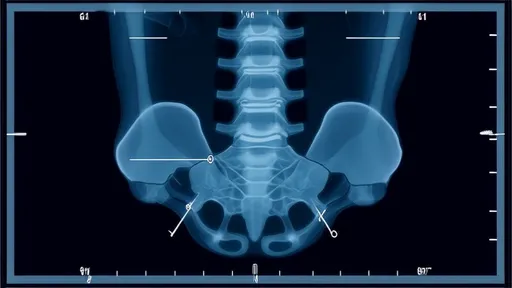
Chiropractors across several metropolitan hospitals have noticed a peculiar trend in their waiting rooms. Patients complaining of lower back stiffness and sciatic nerve discomfort increasingly share one common factor: daily use of rotating platforms marketed as "waist trimmers." Dr. Eleanor Schiff from Mount Sinai's orthopedic department collected X-rays from 37 such patients over six months, discovering micro-fractures in the lumbar vertebrae of 68% of cases. "The repetitive torsional force creates shear stress that the spine isn't designed to withstand," she explains, pointing to cloudy patches on the radiographic images where bone density appears compromised.
The mechanics seem deceptively simple - standing on a rotating disc while twisting the torso. However, MRI scans tell a different story. When the pelvis rotates independently from the shoulders, the intervertebral discs experience uneven compression. Radiologist Mark Chen describes seeing "accordion-like deformation" in the annulus fibrosus of regular users, with several cases showing early signs of degenerative disc disease typically seen in patients two decades older.
Manufacturing Misrepresentations Meet Medical Reality
Product packaging often depicts smiling models twisting dramatically with postures that would make any physiotherapist cringe. "These advertisements show anatomically impossible positions," says biomechanics researcher Dr. Priya Kapoor, who recently published a comparative study between actual user movements and marketing imagery. Her motion-capture lab proved that achieving the promised "90-degree rotation" requires compromising spinal integrity, forcing the sacroiliac joint beyond its 4-5 degree natural range.
Consumer-grade waist twisters typically lack stabilization features, allowing uncontrolled oscillations. X-ray videos demonstrate how this instability causes the coccyx to jerk laterally, straining the iliolumbar ligaments. Several orthopedic surgeons report treating patients with "twister's syndrome" - a newly observed condition involving chronic inflammation of the lumbosacral plexus. What's particularly troubling is that standard lumbar X-rays often miss these soft tissue damages until symptoms become severe.
The Silent Progression of Damage
Unlike acute sports injuries that prompt immediate medical attention, waist twister harm accumulates insidiously. Radiographic comparisons between novice users and six-month practitioners show alarming progression. Initial images might reveal minor facet joint irritation, but follow-up scans frequently demonstrate advanced zygapophyseal joint degeneration. The rotational forces appear to accelerate age-related changes, with some thirty-something users presenting spine morphology resembling septuagenarians.
Dr. Samuel Ortega's longitudinal study tracked cartilage wear patterns using contrast-enhanced X-rays. His findings indicate that the combination of rotation and body weight creates a "grinding wheel effect" on the vertebral endplates. "We're seeing precocious osteophyte formation in otherwise healthy individuals," he notes, displaying comparative images where bony outgrowths encroach on neural pathways after just eighteen months of regular use.
Perhaps most concerning are the compensatory changes observed in full-spine radiographs. As lumbar mobility decreases due to repetitive stress, the thoracic spine often hypermobilizes to compensate, creating a dangerous chain reaction. Several cases demonstrate how this adaptation leads to cervical spine issues, with patients developing tension headaches and reduced neck mobility secondary to their waist-twisting habit.
Rethinking Rotational Exercise Safety
The medical community remains divided on whether these devices can be modified for safe use or should carry warning labels akin to tobacco products. Some rehabilitation specialists argue that controlled, limited rotation under professional supervision might offer benefits for certain patients. However, diagnostic radiologist Dr. Lisa Monroe counters that "the margin between therapeutic and harmful rotation is too narrow for consumer products." Her clinic's fluoroscopy studies show that even guided rotations frequently exceed safe parameters.
Emerging 3D radiographic reconstruction technologies now allow researchers to visualize torsion effects throughout the entire kinetic chain. These detailed models reveal how forces transmit from rotating platforms through the pelvis, often creating torque at unexpected points like the sternoclavicular joints. The findings challenge longstanding assumptions about localized exercise effects, suggesting that "waist-targeted" devices may influence the entire musculoskeletal system.
As evidence mounts, regulatory agencies face increasing pressure to reevaluate classification of these popular fitness tools. Meanwhile, radiologists recommend that persistent back pain sufferers bring their exercise routines - including any use of rotation discs - into the diagnostic conversation. The X-ray findings underscore an uncomfortable truth: sometimes the most dangerous fitness fads aren't those that cause immediate injury, but those that erode structural integrity one gentle twist at a time.

By /Aug 14, 2025
By /Aug 14, 2025

By /Aug 14, 2025

By /Aug 14, 2025

By /Aug 14, 2025

By /Aug 14, 2025

By /Aug 14, 2025

By /Aug 14, 2025

By /Aug 14, 2025

By /Aug 14, 2025

By /Aug 14, 2025

By /Aug 14, 2025

By /Aug 14, 2025

By /Aug 14, 2025

By /Aug 14, 2025

By /Aug 14, 2025
By /Aug 14, 2025
By /Aug 14, 2025

By /Aug 14, 2025

By /Aug 14, 2025
