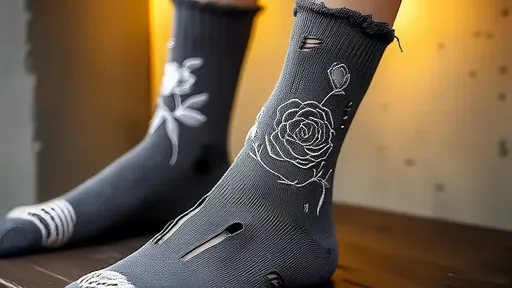
In the world of fashion and sustainability, a curious trend has emerged—one that transforms the mundane into the extraordinary. The humble athletic sock, often relegated to the depths of gym bags and laundry piles, has become an unlikely canvas for creativity. What was once a sign of wear and tear—the dreaded hole in a sock—is now being reimagined through delicate embroidery, turning flaws into focal points. This movement isn’t just about aesthetics; it’s a rebellion against disposable culture, a celebration of resourcefulness, and a nod to the slow fashion ethos.
The concept is simple yet revolutionary. Instead of discarding socks with holes, crafters are picking up needles and thread to mend them with intricate designs. Flowers, geometric patterns, and even whimsical motifs like tiny animals or celestial bodies are stitched over the damaged areas. The result is a pair of socks that tells a story—one of longevity, care, and individuality. This practice, often referred to as "visible mending," challenges the notion that damaged clothing is beyond repair. Instead, it embraces imperfections, turning them into opportunities for artistic expression.
Social media platforms like Instagram and Pinterest have played a pivotal role in popularizing this trend. A quick search for #SockEmbroidery or #VisibleMending reveals thousands of posts showcasing vibrant, hand-embroidered socks. Some feature delicate daisy chains trailing up the ankle, while others boast bold, abstract designs that transform the sock into a wearable art piece. The trend has resonated particularly with younger generations, who are increasingly drawn to sustainable practices and unique, personalized fashion. For many, embroidering socks is more than a hobby—it’s a statement against fast fashion’s environmental toll.
The rise of sock embroidery also reflects a broader cultural shift toward mindfulness in consumption. In an era where clothing is often treated as disposable, the act of repairing and embellishing a worn-out sock feels almost radical. It’s a small but meaningful way to push back against the throwaway mentality that dominates modern consumerism. By choosing to mend rather than replace, individuals are reducing waste and extending the life of their garments. This aligns with the principles of the circular economy, where products are designed to be reused, repaired, and recycled rather than discarded after a short lifespan.
Beyond its environmental benefits, sock embroidery offers a therapeutic outlet for creativity. The repetitive motion of stitching can be meditative, providing a respite from the digital overload of daily life. Many enthusiasts describe the process as grounding, a way to reconnect with the tactile pleasures of handmade crafts. For some, it’s also a form of self-care—a chance to slow down and create something beautiful with their hands. The finished product, whether a subtle floral accent or a riot of colorful threads, carries the imprint of the maker’s time and attention, making it all the more special.
Interestingly, the trend has also sparked conversations about the value of labor and skill in fashion. In a world where mass-produced clothing is cheap and readily available, handmade items stand out as treasures. Embroidering a sock might take hours, but the result is a one-of-a-kind piece that can’t be replicated by machines. This emphasis on craftsmanship challenges the devaluation of textile arts in contemporary culture. It reminds us that clothing isn’t just about utility; it’s a form of personal expression and cultural heritage.
Of course, sock embroidery isn’t without its challenges. Working with stretchy, thin sock fabric requires patience and practice. Beginners often struggle with puckering or uneven stitches, but part of the trend’s charm lies in its imperfections. Online communities have sprung up to share tips and techniques, fostering a sense of camaraderie among newcomers and seasoned stitchers alike. Tutorials on selecting the right needles, threads, and stabilizers abound, making the craft accessible to anyone willing to give it a try.
As the movement grows, some small businesses have begun offering custom-embroidered socks or DIY kits for those who want to learn. These kits typically include pre-holed socks (ethically sourced, of course), embroidery floss, needles, and instructions. For those less inclined to DIY, independent artists on platforms like Etsy sell ready-made embroidered socks, often with designs tailored to the buyer’s preferences. This commercialization, while modest, signals a growing market for sustainable, artisanal fashion alternatives.
Looking ahead, the sock embroidery trend shows no signs of slowing down. Its appeal lies in its simplicity and the way it marries practicality with creativity. In a single stitch, it encapsulates larger cultural currents—sustainability, mindfulness, and a yearning for authenticity in an increasingly homogenized world. What started as a clever way to salvage old socks has blossomed into a global phenomenon, proving that even the smallest acts of creativity can have a ripple effect. Whether you’re a seasoned embroiderer or a curious beginner, there’s never been a better time to pick up a needle and transform a hole into something extraordinary.

By /Aug 14, 2025
By /Aug 14, 2025

By /Aug 14, 2025

By /Aug 14, 2025
By /Aug 14, 2025

By /Aug 14, 2025

By /Aug 14, 2025

By /Aug 14, 2025

By /Aug 14, 2025

By /Aug 14, 2025

By /Aug 14, 2025

By /Aug 14, 2025

By /Aug 14, 2025

By /Aug 14, 2025

By /Aug 14, 2025
By /Aug 14, 2025
By /Aug 14, 2025

By /Aug 14, 2025
By /Aug 14, 2025
By /Aug 14, 2025
