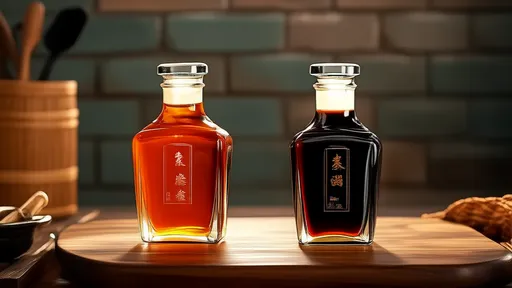
The art of fermenting broad bean paste reaches its zenith in the prized three-year aged red oil doubanjiang, a condiment that embodies centuries of Sichuanese culinary tradition. Unlike mass-produced alternatives, this amber-hued elixir undergoes a patient transformation in earthenware jars, developing a viscosity and depth that can only be achieved through seasonal temperature fluctuations and microbial alchemy.
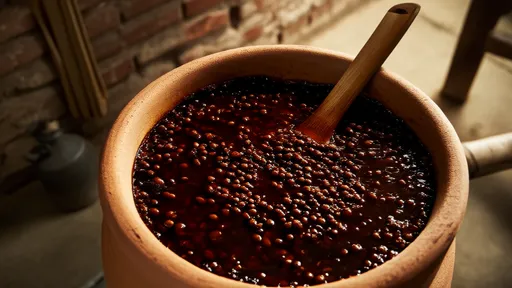
At the heart of premium doubanjiang classification lies the red oil density - a tactile quality that separates ceremonial-grade paste from ordinary table condiments. Artisans measure maturity not by calendar years alone, but by observing how the crimson oil separates and pools when a wooden spoon is drawn through the fermented mash. The most revered batches exhibit a slow, syrupy resistance, with oil ribbons that hold their shape for seconds before melting back into the paste.
Microclimate plays an often-overlooked role in developing this luxurious texture. In Pixian's fermentation cellars, the humidity during plum rain season creates a unique environment where mold cultures break down starches into complex lipids. This biological process, occurring over thirty-six consecutive months, yields an oil so dense it clings to porcelain like liquid garnet. Connoisseurs recognize this characteristic as the "tears of doubanjiang," mirroring the phenomenon observed in aged balsamic vinegar.
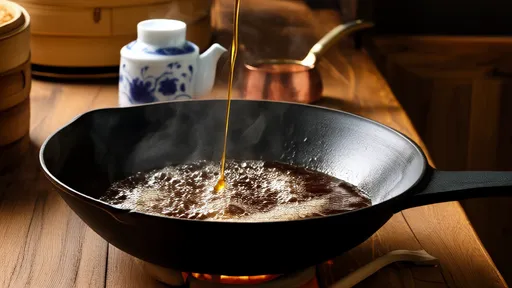
The grading system for three-year pastes incorporates multiple sensory parameters beyond mere oil content. Master blenders assess the tactile feedback during stirring - premium batches offer progressive resistance, similar to folding molten chocolate. When decanted, the oil should cascade in unbroken threads that briefly maintain their structure before dissolving, indicating optimal peptide bonding between the fermented broad beans and chili compounds.
Modern food science has begun quantifying what traditional makers long understood intuitively. Chromatography reveals that elite three-year pastes contain over 120 distinct volatile compounds in their red oil fraction alone. These lipid-soluble flavor carriers create the paste's signature flavor latency - the delayed yet prolonged taste development that distinguishes truly aged doubanjiang from accelerated fermentation products.
Storage vessels contribute significantly to oil density development. Unglazed clay pots from Yibin, with their distinctive mineral composition, permit gradual oxygen exchange while preventing excessive evaporation. This results in a gradual concentration of oils without desiccation - a balance commercial stainless steel vats struggle to achieve. The finest producers still use century-old jars whose porous walls harbor unique microbial ecosystems.
Market confusion often arises between oil density and mere chili oil content. Authentic aged red oil derives its body from fermented broad bean lipids rather than supplemental vegetable oils. Discerning buyers perform the moonlight test: when held against light, genuine three-year oil displays deep translucency with suspended golden particles, whereas adulterated versions appear either cloudy or artificially clear.
The labor-intensive grading process involves multiple blind tastings at different temperatures. At 14°C, the oil should exhibit maximum viscosity without solidifying. When warmed to body temperature, it must release an aromatic bouquet without separating. These rigorous standards explain why less than 8% of each year's production qualifies for top-tier classification.
Contemporary chefs have discovered that this dense red oil performs culinary alchemy beyond Sichuan cuisine. Its structured viscosity makes it ideal for creating stable emulsions in modernist preparations, while its slow flavor release enhances umami perception in reduced sauces. Some avant-garde mixologists even employ drops as a cocktail modifier, where its weighty texture anchors volatile aromatics.
As global demand grows, protecting the integrity of aged doubanjiang grading becomes paramount. Recent initiatives employ blockchain technology to verify fermentation timelines, while spectroscopic analysis certifies oil density standards. Yet ultimately, as master blender Zhao Xiaoming observes, "The truest measure remains the wooden spoon - when it stands upright in the paste, and the falling oil moves like mountain honey in January, we know the three-year journey was worthwhile."
By /Aug 11, 2025
By /Aug 11, 2025
By /Aug 11, 2025

By /Aug 11, 2025
By /Aug 11, 2025
By /Aug 11, 2025
By /Aug 11, 2025
By /Aug 11, 2025

By /Aug 11, 2025
By /Aug 11, 2025
By /Aug 11, 2025
By /Aug 11, 2025
By /Aug 11, 2025

By /Aug 11, 2025

By /Aug 11, 2025
By /Aug 11, 2025
By /Aug 11, 2025
By /Aug 11, 2025
By /Aug 11, 2025
By /Aug 11, 2025