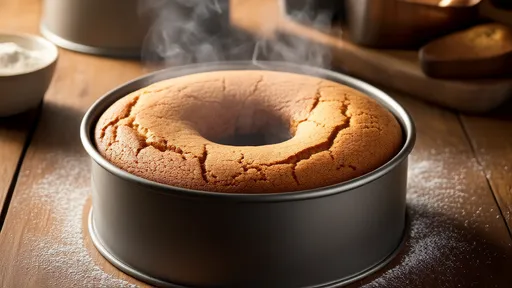
There’s nothing more disheartening for a baker than pulling a beautifully risen cake out of the oven, only to watch it sink into a sad, sunken mess as it cools. Collapsed centers, uneven textures, and dreaded cracks can turn a labor of love into a baking disaster. While there are many factors that contribute to a cake’s structural integrity—ingredient ratios, oven temperature, and mixing methods—one often overlooked yet critical step is the simple act of tapping or dropping the cake pan immediately after baking. This technique, known as "releasing steam" or "dropping the pan," plays a surprisingly vital role in preventing those frustrating dips and dents.
The science behind this method lies in the behavior of trapped steam. During baking, moisture within the batter turns to steam, creating air pockets that help the cake rise. As the cake sets, these pockets solidify, forming its crumb structure. However, if too much steam remains trapped inside after baking, it continues to expand while the cake’s exterior cools and hardens. This imbalance creates internal pressure that can collapse delicate cell walls, leading to an uneven or sunken surface. By gently but firmly tapping the hot pan on a countertop, bakers force out excess steam, allowing the cake’s interior to stabilize without unnecessary stress.
Not all cakes benefit equally from this technique. Dense, moist cakes like chocolate mud cakes or carrot cakes, which rely on higher liquid content, are particularly prone to sinking if steam isn’t properly released. Conversely, light sponge cakes or angel food cakes, with their delicate foam structures, require a more cautious approach—excessive force can deflate their airy texture. The key is adjusting the intensity of the tap based on the cake’s density. A sturdy pound cake might withstand a firm drop from a few inches high, while a chiffon cake may only need a light rap to settle without damage.
Beyond preventing collapses, proper steam release also impacts a cake’s aging process. Trapped moisture doesn’t just vanish; it migrates, potentially creating soggy layers or condensation that accelerates staling. Bakers who notice their cakes become excessively moist or develop a gummy texture after a day might be dealing with residual steam issues. Strategic tapping, combined with proper cooling rack placement (elevated to allow air circulation), helps distribute moisture evenly, preserving freshness without compromising structure.
Interestingly, professional kitchens often employ variations of this method. Some pastry chefs use thin skewers to create deliberate steam vents in extra-deep cakes, while others incorporate the "drop" into their routine with theatrical flair—slamming pans down with practiced precision. Home bakers can adapt these principles without professional tools: rotating the pan mid-tap to target different sections or using oven mitts to lightly press the cake’s surface (for particularly stubborn steam pockets) can make a noticeable difference.
The timing of this step is just as crucial as the execution. Tap too soon, and the cake may still be too liquid to hold its shape; too late, and the steam has already done its damage. The ideal window is typically within the first 30-60 seconds after removal from the oven, when the cake is set enough to maintain form but still flexible enough to release vapor. Observing the cake’s behavior—when it just begins to pull away from the pan’s edges—often provides the clearest visual cue.
While tapping addresses immediate steam concerns, it’s part of a larger ecosystem of cake stability. Pairing this technique with accurate oven temperatures (verified by a standalone thermometer), proper leavening agent measurements, and avoiding overmixing creates a fail-safe environment for even rises. Bakers troubleshooting persistent sinking issues should consider these interconnected factors rather than relying solely on post-bake adjustments.
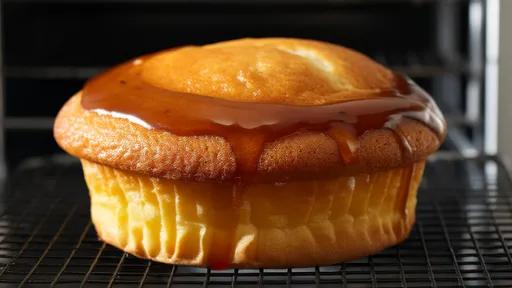
Cultural baking traditions have long recognized the importance of steam management, albeit through different lenses. Japanese cotton cheesecakes, known for their jiggly perfection, often undergo a controlled cooling process where oven doors are left slightly ajar to prevent sudden temperature changes. European butter cakes frequently include a brief "sweating" phase under a cloth to regulate moisture release. The common thread is an understanding that how a cake transitions from oven to room temperature profoundly affects its final texture.
Modern baking science continues to explore this phenomenon, with some researchers examining how specific tapping frequencies might influence different batter compositions. Preliminary studies suggest that certain vibration patterns could optimize bubble distribution in commercial baking operations. While home bakers needn’t delve into such complexities, being mindful of the physics at play transforms a mundane tap into a purposeful technique.
For those documenting their baking journeys, tracking tap intensity and results can reveal surprising patterns. A baking journal might note that red velvet cakes benefit from two medium taps followed by five minutes of undisturbed cooling, while lemon drizzle cakes prefer a single sharp impact. These nuanced observations elevate baking from following recipes to understanding them—a small but empowering shift for any enthusiast.
Beyond cakes, the principle of controlled steam release applies to other baked goods. Breads benefit from strategic scoring to direct expansion, while popovers rely on initial high heat to create steam-driven lifts before lowering temperatures to set their structure. Recognizing these shared mechanisms builds a more intuitive approach to baking across categories.
As with any technique, mastery comes with observation and adjustment. The satisfying thud of a well-tapped cake pan marks not just the end of baking, but the beginning of understanding—one perfectly flat cake at a time.
By /Aug 11, 2025
By /Aug 11, 2025
By /Aug 11, 2025
By /Aug 11, 2025
By /Aug 11, 2025

By /Aug 11, 2025
By /Aug 11, 2025
By /Aug 11, 2025
By /Aug 11, 2025

By /Aug 11, 2025
By /Aug 11, 2025
By /Aug 11, 2025

By /Aug 11, 2025

By /Aug 11, 2025

By /Aug 11, 2025
By /Aug 11, 2025
By /Aug 11, 2025
By /Aug 11, 2025
By /Aug 11, 2025
By /Aug 11, 2025