Rehydrate Cold Noodle Sheets with Water Spray to Prevent Dryness"

Aug 11, 2025 By

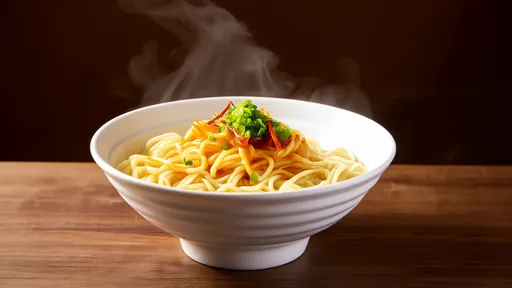
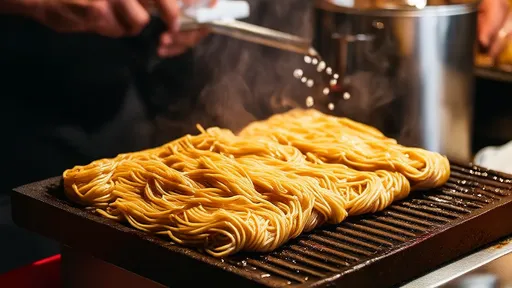
In the bustling streets of northern China, a humble yet beloved snack has captured the hearts and taste buds of locals and tourists alike. Known as "kao leng mian" or grilled cold noodles, this street food sensation has recently gained attention for a peculiar but crucial step in its preparation – the spraying of water on cold noodle sheets to prevent them from drying out and hardening during the cooking process.

The art of preparing perfect kao leng mian begins with these thin, square sheets of cold noodles made from wheat or potato starch. Vendors carefully separate the delicate sheets, which arrive stacked together in packages, before subjecting them to the heat of a flat iron grill. It's at this critical juncture that the water spray bottle becomes the chef's most important tool.

Why does this simple technique make such a dramatic difference? The science behind it reveals that cold noodle sheets contain starches that undergo retrogradation when heated – a process where starch molecules realign and expel water, leading to that undesirable hard, chewy texture. By periodically misting the noodles with water during cooking, vendors maintain just enough moisture to keep the sheets pliable while still achieving the characteristic slightly crispy edges that define great kao leng mian.

Street vendors have developed this technique through years of trial and error. "When I first started making kao leng mian twenty years ago," shares Mr. Zhang, a veteran vendor in Changchun, "we didn't know about spraying water. The noodles would often stick to the grill or become too tough. Now every professional uses this method – it's what separates okay kao leng mian from exceptional kao leng mian."

The water-spraying technique has become so integral to the process that specialized tools have emerged. Some vendors use repurposed household spray bottles, while others invest in professional misting devices that create an ultra-fine water vapor. The frequency and amount of water applied varies by vendor – too much and the noodles become soggy; too little and they dry out. This delicate balance represents one of the many subtle skills that street food masters develop through years of practice.

Beyond texture, the water spray serves another important function: it helps distribute heat evenly across the noodle sheet. As the water evaporates, it carries heat with it, preventing hot spots that could cause uneven cooking. This is particularly important when cooking multiple noodle sheets simultaneously on a large grill surface, a common sight during busy lunch hours when queues form at popular stalls.

Interestingly, the water spray technique has evolved differently across regions. In Harbin, vendors tend to use a heavier spray, resulting in slightly softer noodles, while in Shenyang, a lighter touch prevails, yielding a chewier texture. These regional variations add to the rich tapestry of kao leng mian styles found throughout northeastern China, where the dish originated before spreading nationwide.

The importance of proper hydration becomes even more apparent when examining failed attempts at making kao leng mian. Home cooks trying to replicate the street food magic often report disappointing results precisely because they overlook this crucial step. Without periodic moistening, the noodles transform into something more resembling a cracker than the tender-yet-slightly-chewy texture that makes kao leng mian so distinctive.

As Chinese street food gains international recognition, the techniques behind dishes like kao leng mian are receiving newfound attention from food scientists and culinary professionals worldwide. The water-spraying method in particular has drawn interest as an example of how traditional cooking methods often have sound scientific bases, even if developed empirically over generations of practice.

Next time you watch a kao leng mian vendor at work, pay close attention to that spray bottle action. What might seem like a simple trick is actually the product of decades of culinary refinement – a perfect example of how China's vibrant street food culture continues to innovate while staying true to its roots. The humble water spray ensures that each bite of kao leng mian delivers that perfect harmony of textures that has made this snack a national favorite.
Recommend Posts
Food

Burned Flavor Removal: Transfer the Pot and Add Bread Slices to Absorb the Odor"

By /Aug 11, 2025

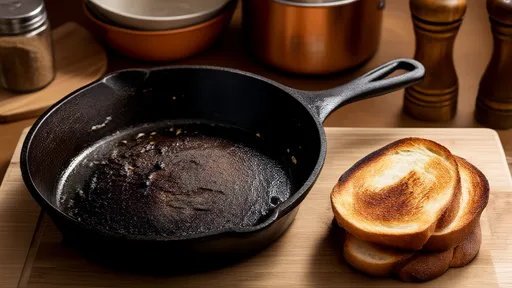
There’s nothing quite as disheartening as realizing your carefully prepared dish has taken a turn for the worse—burnt to the bottom of the pot. Whether it’s an overzealous flame or a momentary distraction, scorched food is a common kitchen mishap. But before you resign yourself to the lingering smell of charred remnants, there’s an age-old trick that might just save the day: transferring the pot and using bread slices to absorb the unwanted odors.
Food

Only Noodles Left: Emergency Version of Scallion Oil Noodles"

By /Aug 11, 2025

In the quiet hum of an empty pantry, a lone bundle of dried noodles stares back at you. The clock ticks past dinner time, and takeout menus seem increasingly unappealing. This is the moment when resourcefulness takes the stage—the humble scallion oil noodles, a dish born from scarcity, rises to the occasion with quiet brilliance. Unlike its elaborate culinary cousins, this emergency version demands nothing more than what most kitchens might still harbor: a handful of forgotten aromatics, a splash of pantry staples, and about ten minutes of patience.
Food

Power Outage Thawing: Cold Water Sealed Bag Method

By /Aug 11, 2025

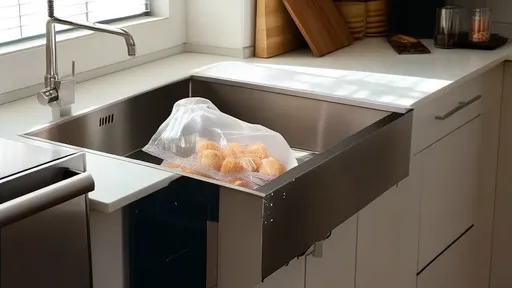
When the power goes out unexpectedly, one of the first concerns in any household is the preservation of perishable food items. Freezers full of meat, vegetables, and other frozen goods suddenly become ticking time bombs as the clock starts ticking on their thawing process. While traditional methods like transferring items to a cooler with ice can help, an innovative technique using sealed bags and cold water has gained traction for its efficiency and simplicity.
Food

No Water Dishwashing: Wet Wipes + Baking Soda"

By /Aug 11, 2025

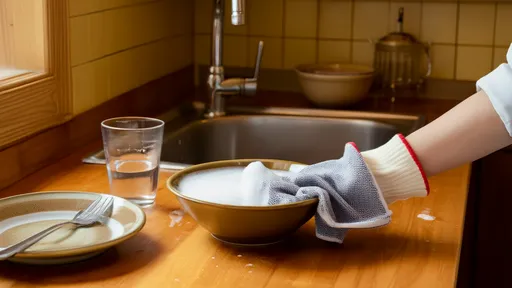
When the water supply is suddenly cut off, even the most mundane household tasks can become frustrating challenges. Washing dishes without running water seems impossible at first glance, but with a little creativity and some common household items, it’s entirely manageable. One surprisingly effective method involves using wet wipes and baking soda—a combination that not only cleans but also deodorizes, leaving your dishes spotless even when the taps run dry.
Food

Sugar-Fried Chestnuts: Proper Notching Depth to Prevent Explosion

By /Aug 11, 2025

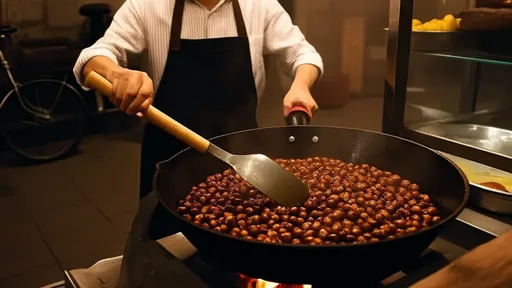
Autumn brings with it the comforting aroma of roasted chestnuts, a seasonal delight enjoyed by many. Among the various techniques used to prepare these nuts, the sugar-roasting method stands out for its perfect balance of sweetness and texture. However, achieving that ideal crackle without the nuts bursting open requires precision, particularly in the initial preparation stage. One critical step often overlooked by home cooks is the depth of the incision made on each chestnut before roasting.
Food

Kanto-Boiled Soup Base: Apple + Konbu for a Fresh and Sweet Origin

By /Aug 11, 2025

The art of crafting a perfect broth lies in the harmony of ingredients, and few combinations are as unexpectedly delightful as the pairing of apples with kombu in a traditional Japanese oden soup base. This unique blend marries the natural sweetness of apples with the umami-rich depth of kombu seaweed, creating a broth that is both comforting and complex. While oden is typically associated with savory flavors, the addition of apples introduces a subtle fruity note that elevates the entire dish.
Food

Rehydrate Cold Noodle Sheets with Water Spray to Prevent Dryness"

By /Aug 11, 2025

In the bustling streets of northern China, a humble yet beloved snack has captured the hearts and taste buds of locals and tourists alike. Known as "kao leng mian" or grilled cold noodles, this street food sensation has recently gained attention for a peculiar but crucial step in its preparation – the spraying of water on cold noodle sheets to prevent them from drying out and hardening during the cooking process.
Food

Wolf Tooth Potato: Standard Thickness for Wavy Knife Cuts"

By /Aug 11, 2025

The culinary world thrives on precision, and nowhere is this more evident than in the meticulous preparation of ingredients. Among the many techniques that have gained popularity, the art of cutting potatoes into wavy, jagged slices—commonly known as "wolf tooth potatoes" or lang ya tudou—has become a staple in street food culture. The distinct texture and visual appeal of these potatoes rely heavily on the thickness of each slice, making the wave-cutting technique a critical factor in achieving the perfect bite.
Food

Oil Brushing Amount in Egg Burger Mold Determines Demolding"

By /Aug 11, 2025

The art of making the perfect egg burger is a delicate balance of ingredients, timing, and technique. Among the many factors that contribute to a flawless final product, the amount of oil applied to the mold stands out as a critical yet often overlooked element. The right amount of oil ensures easy release, a golden crust, and an even cook, while too little or too much can lead to sticking, uneven browning, or an overly greasy texture. Mastering this aspect can elevate an amateur cook’s egg burger from mediocre to exceptional.
Food

Substitute for Fish Sauce: Shrimp Paste and Soy Sauce Blending Plan

By /Aug 11, 2025

The culinary world thrives on innovation and adaptation, especially when it comes to recreating complex flavors with accessible ingredients. One such challenge involves finding a suitable substitute for fish sauce, a staple in Southeast Asian cooking known for its pungent umami depth. While nothing can perfectly replicate its unique fermentation profile, an intriguing alternative has emerged from pantry staples: a balanced blend of shrimp paste and light soy sauce.
Food

Broad Bean Paste Grading: Density of Three-Year Aged Red Oil

By /Aug 11, 2025

The art of fermenting broad bean paste reaches its zenith in the prized three-year aged red oil doubanjiang, a condiment that embodies centuries of Sichuanese culinary tradition. Unlike mass-produced alternatives, this amber-hued elixir undergoes a patient transformation in earthenware jars, developing a viscosity and depth that can only be achieved through seasonal temperature fluctuations and microbial alchemy.
Food

Enhancing Vinegar Aroma: Stir-frying with Hot Pan to Stimulate Ester Release

By /Aug 11, 2025

The art of cooking is as much a science as it is a craft, and nowhere is this more evident than in the technique of vinegar splash-frying to release aromatic esters. This ancient culinary practice, deeply rooted in Chinese gastronomy, transforms ordinary vinegar into an extraordinary flavor enhancer through precise temperature control and timing.
Food

Soy Sauce Grading: Flavor Profiles of First Draw / Light Soy Sauce / Dark Soy Sauce

By /Aug 11, 2025

The world of soy sauce is far more nuanced than the average supermarket shopper might imagine. Beyond the basic categories of light and dark soy sauce lies a fascinating spectrum of flavors, textures, and brewing techniques that have evolved over centuries in Asian culinary traditions. Among these variations, three distinct types stand out for their unique characteristics and culinary applications: first extract soy sauce, light soy sauce, and dark soy sauce. Each variety tells a story of craftsmanship, time, and transformation.
Food

Fruit Popsicles: Yogurt + Fruit Bits Freezing Formula

By /Aug 11, 2025

The humble popsicle has undergone a gourmet transformation in recent years, evolving from simple sugar water frozen on a stick to sophisticated dessert creations that balance health and indulgence. Among these elevated frozen treats, yogurt-based fruit popsicles have emerged as a standout favorite, combining the creamy tang of yogurt with the vibrant freshness of real fruit pieces. This winning formula delivers not just refreshment but also nutritional benefits, making it a guilt-free pleasure for all ages.
Food

Cartoon Breakfast: Seaweed Mold Presses Animal Shapes

By /Aug 11, 2025

The morning ritual of breakfast preparation has taken a delightful turn in kitchens across Asia, where creative parents and food enthusiasts have discovered the magic of transforming ordinary meals into edible works of art. Among the most charming trends emerging from this culinary creativity is the use of seaweed molds to craft adorable animal shapes that bring both nutrition and joy to the breakfast table.
Food

Muffin Burst Head: The Golden Rule of Batter to Fill 90%"

By /Aug 11, 2025

The art of baking perfect muffins is often shrouded in mystery, with home bakers and professionals alike chasing that elusive combination of a domed top, tender crumb, and just the right amount of sweetness. Among the many variables that contribute to muffin perfection, one golden rule stands out: filling the muffin cups to the nine-tenths mark. This seemingly simple guideline, often referred to as the "golden line" for muffin batter, is the secret behind achieving those coveted bakery-style "muffin tops" with a beautiful, cracked surface.
Food

Brioche Layering: Easier Handling with Frozen Butter Slices

By /Aug 11, 2025

The art of crafting the perfect croissant lies in mastering the lamination process, where layers of butter and dough intertwine to create that signature flaky texture. Among the many techniques debated by pastry chefs, one method stands out for its practicality and consistency: freezing butter sheets before incorporation. This approach, often overlooked in home baking, holds the key to achieving professional-quality results with minimal frustration.
Food

Prevent Cake Depression: Release Heat by Shaking the Mould After Baking

By /Aug 11, 2025

There’s nothing more disheartening for a baker than pulling a beautifully risen cake out of the oven, only to watch it sink into a sad, sunken mess as it cools. Collapsed centers, uneven textures, and dreaded cracks can turn a labor of love into a baking disaster. While there are many factors that contribute to a cake’s structural integrity—ingredient ratios, oven temperature, and mixing methods—one often overlooked yet critical step is the simple act of tapping or dropping the cake pan immediately after baking. This technique, known as "releasing steam" or "dropping the pan," plays a surprisingly vital role in preventing those frustrating dips and dents.
Food

Prevent Cookie Spreading: Chill the Dough for 1 Hour Before Baking"

By /Aug 11, 2025

The art of baking perfect cookies has long been debated among home bakers and professionals alike. While recipes may vary in ingredients and techniques, one principle remains surprisingly consistent: chilling the dough before baking yields superior results. This simple step, often overlooked in the rush to get cookies into the oven, holds the key to texture, flavor development, and that coveted balance between crisp edges and chewy centers.
Food

Reviving Dried Goods: Accelerate Soaking with Warm Water and Sugar

By /Aug 11, 2025

In the world of culinary arts, few techniques are as universally useful yet underappreciated as rehydrating dried ingredients. Whether you're working with mushrooms, seaweed, or dried fruits, the process of bringing these preserved foods back to life can make or break a dish. Among the various methods chefs and home cooks employ, one stands out for its simplicity and effectiveness: using warm water with a touch of sugar to accelerate the rehydration process.